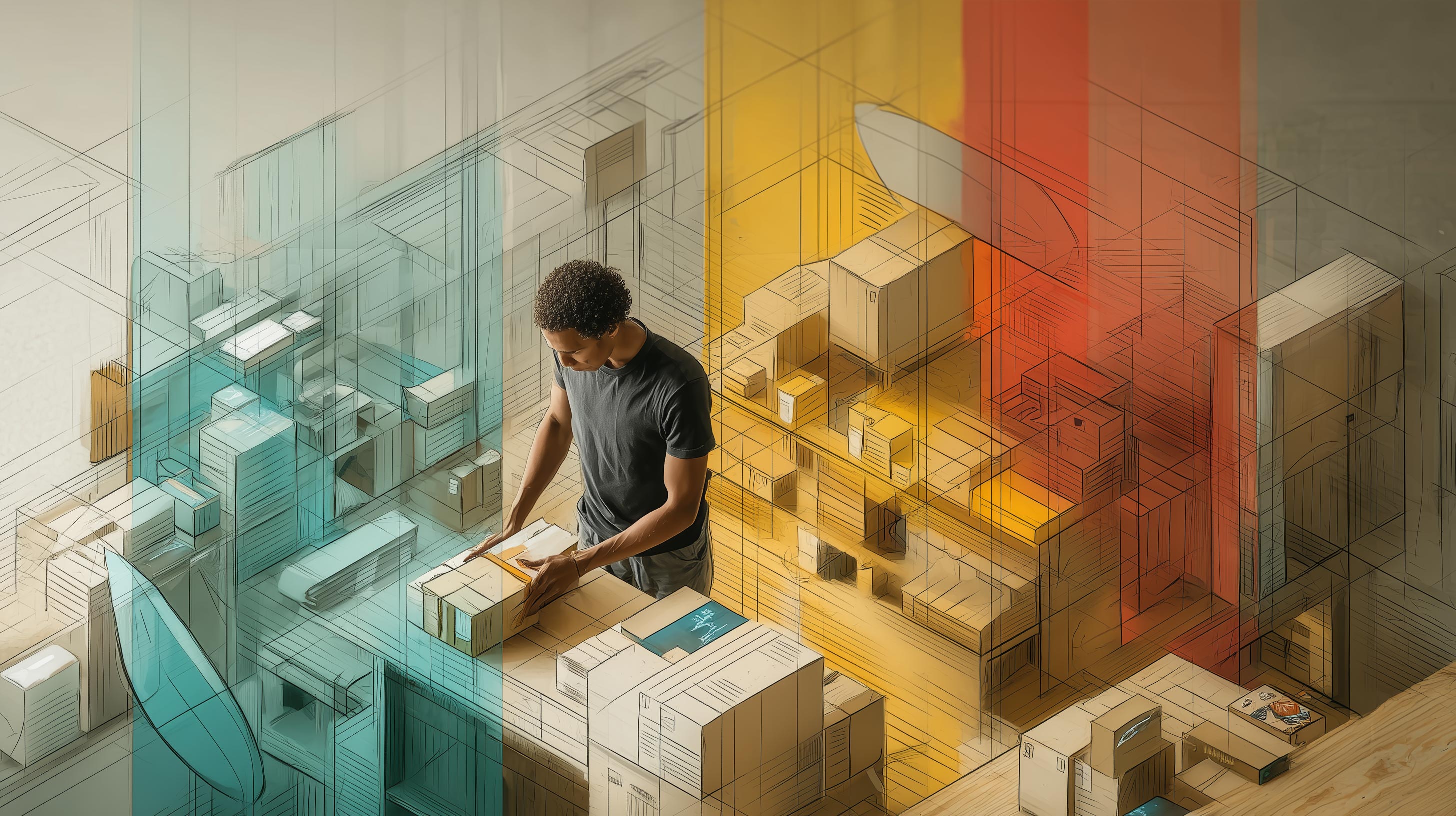
Enterprise · Logistics
A $269 billion market still running on phone calls.
The research found out exactly why. Then the designs went a different direction.
The problem
Left out in the wind. No broker. No system. No one to call.
Small businesses were left out in the wind. They were trying to figure everything out themselves while the tariff situation was literally blowing up. Shopping rates meant toggling between websites, software, and email chains with freight forwarders. When something went wrong in transit, calling was the only option.
-
01
No visibility.
Their goods got caged in customs. They had no way to track what was happening or why.
-
02
No one who could help.
They spent hours on the phone being passed from one person to another. No answers. No resolution.
-
03
No recourse.
Sometimes the goods came back damaged. With no system and no broker, there was nowhere to turn.
How might we design a differentiated Global Air Freight digital end-to-end experience for small and medium-sized international shippers that makes it easy to create and manage shipments?
The research
Sixteen interviews. The same story every time.
16 in-depth interviews
In-depth interviews
133 survey respondents
Survey respondents
300+ concept testing participants
Concept testing participants
5 countries
Countries
Customer research began with 16 in-depth interviews with international shippers in the United States and Hong Kong, followed by a preference pulse survey of 133 respondents and concept testing with 300+ participants across five countries: the US, Hong Kong, China, Mexico, and Germany.
The pattern that emerged across all five countries was the same. Shippers were shopping rates through a mix of websites, installed software, and email exchanges with freight forwarders. Booking a shipment meant days of back-and-forth on documentation. And when something went wrong in transit, calling was the only way to get real information. That gap was the design opportunity.
What the research pointed to
One place to quote, book, track, and resolve.
The research validated four priority areas: getting a quote, booking a shipment, tracking in transit, and managing billing. The design solution addressed all four in a single connected experience.
Multi-carrier rate comparison, a quote-to-booking flow with no handoff gaps, enhanced visibility, and billing transparency. Designs were validated with over 300 participants across five countries, resulting in a high-fidelity clickable prototype and a leadership presentation that secured buy-in for the next phase.
The work established the core experience design for what became FedEx’s Global Air Freight digital platform: a foundation for a market the company was actively working to expand into.
Self-serve problem resolution replaced the phone call for the most common in-transit issues. Billing transparency surfaced surcharges before they became surprises. For the first time, a shipper could move from initial rate inquiry all the way through booking and tracking without switching platforms or picking up a phone.
What Happened
Leadership requested high-fidelity screens and a video due at the same time as the final research. While the application was actively being designed, we were in the middle of interviewing and testing concepts. Attempts were made to keep the design team informed of the research findings, but the designs were moving too quickly. Ultimately, we did the unveiling of the research and the designs in the same week. Most leadership did not attend the research unveiling
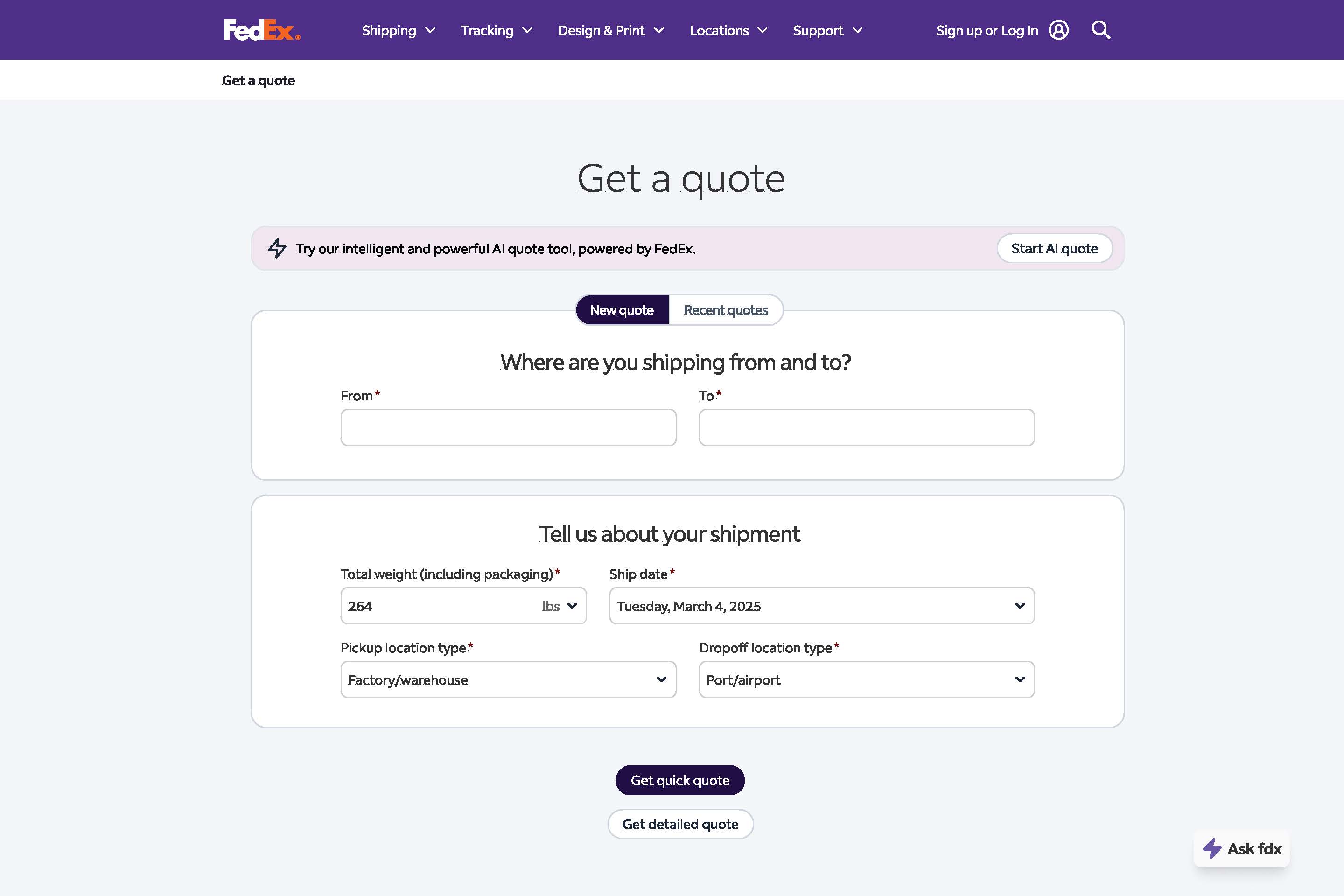
The quoting and booking phases shipped, but the rest did not. The map showing the location for all shipments — with indicators for what was on time, late, or had problems — was scrapped and replaced with a table. The shipment detail page showing the journey, photos, and self-service resolution was not implemented.
As a result, small business shippers still are unable to track their shipments in real time or proactively fix issues as they arise — and are still calling.
A design that cannot be traced back to a finding cannot be defended. A finding that does not make it into the design might as well not exist.
The research held. The process did not.
The teaching moment
The research was right. But leadership wasn’t in the room.
The evidence
A finding needs a defender.
The research was rigorous. It was validated across five countries. But the week the video arrived, it did not matter. Nobody attended the research unveiling.
The distraction
Polish can replace proof.
A polished video arrived the same week as the research. Leadership chose the video. The research never made it into the room where decisions were made.
The lesson
Lead with the finding. Not the frame.
The video could have been built around the research insights. That would have given leadership the story and the evidence at the same time.
Contact
Let’s talk about what your program needs next.
Direct conversation, no pitch deck. Tell me what your program is wrestling with and where it’s behind. I’ll respond with how the method addresses it.